



- Neil Patel’s question about AI trust signals exposed how little the SEO industry still knows about AI search visibility.
- Data suggests branded web mentions may matter far more than backlinks when it comes to earning citations in AI-generated answers.
The SEO industry spent years learning how Google rankings worked.
AI search is proving to be a different challenge.
On 14 June, Neil Patel asked a direct question on X: which trust signals do AI platforms actually care about, and does the answer change between ChatGPT, Gemini and Perplexity?
The replies showed the state of the industry. Experienced SEO practitioners had theories, but no settled answer.
That uncertainty matters because AI search does not work like a traditional search results page. A brand may be cited in the answer, or it may be left out completely.

Brand mentions may matter more than backlinks
The strongest clue comes from recent research by Ahrefs.
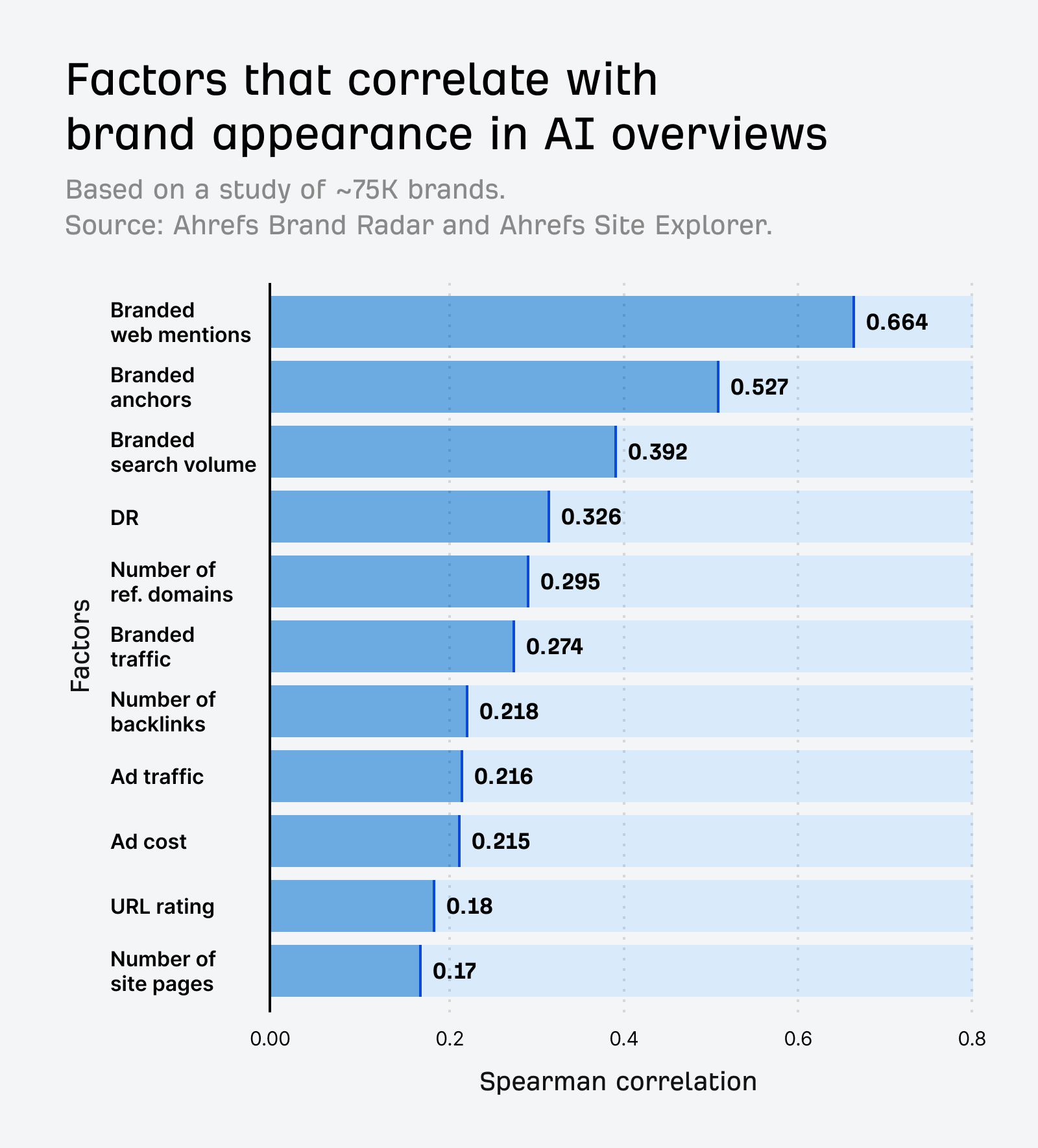
After analyzing 75,000 brands, Ahrefs found that branded web mentions had the strongest correlation with AI citations at 0.664.
Traditional SEO metrics were weaker. Domain Rating showed a correlation of 0.326, while backlink count came in at just 0.218.
That suggests AI platforms may care less about how many links a brand has and more about how often that brand is discussed across the web.
That is uncomfortable for many SEO teams.
Backlinks can be built, bought, measured and reported. Genuine brand discussion is harder to create. It usually comes from reputation, media coverage, community visibility, useful products and people actually talking about the brand.
There is no single AI ranking system
Part of the confusion comes from the fact that there is no single AI search engine.
Research from Search Atlas, based on more than 5.5 million AI responses, found that ChatGPT, Gemini and Perplexity often cite different sources even when answering the same question.
That means marketers may be optimizing for several citation systems at the same time.
A tactic that helps in one platform may have little impact in another.
This explains why practitioners in Patel’s thread were asking about expert authors, brand mentions, reviews and authority signals. The rules appear to vary depending on which AI platform is generating the answer.
Google rankings are no longer enough
Microsoft has also suggested that AI systems evaluate content differently from traditional search engines.
Instead of ranking entire pages, AI systems often extract specific passages and pieces of information that can be used inside an answer.
That creates a different kind of visibility problem. A page with strong Google rankings may not be cited by an AI system. A lesser-known source may appear if its content is clear, specific and easy to extract.
The result is a new visibility layer on top of traditional SEO.
Ranking well in Google still matters. But it no longer guarantees visibility inside AI-generated answers.
The takeaway
Patel’s thread did not produce a final answer, and that is the point.
The industry is still working out which signals matter in AI search, how they differ by platform and how brands can measure progress.
For now, the available data points in one clear direction: brand presence across the web appears to matter more than many traditional SEO metrics.
That means AI visibility may be less about building more links and more about becoming a brand that people, publishers and communities mention without being asked.


