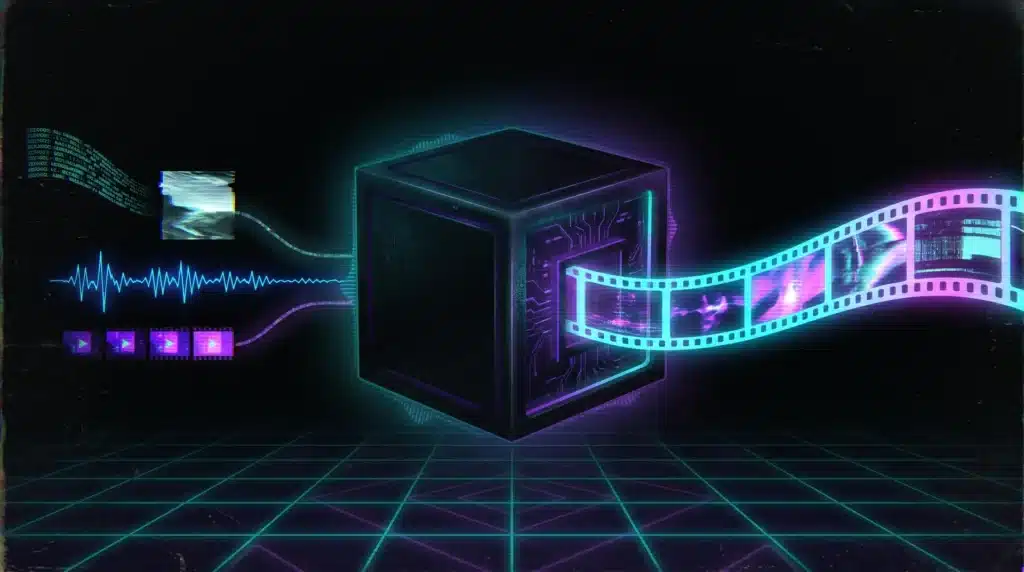
- Google has introduced Gemini Omni Flash, a new multimodal generative model designed to create and edit video from text, images, audio and video inputs.
- The launch points to a bigger shift in AI media tools: video generation is moving from simple text prompts toward conversational editing and multi-input creative workflows.
Google is pushing deeper into AI-generated video with Gemini Omni Flash, a new model designed to create and edit video from multiple types of input.
The model was published by Google DeepMind on May 19, 2026 and is described as “our next step towards models that can create and edit anything from any input, starting with video.” According to the official Gemini Omni Flash model card, the system accepts text, images, audio and video files as inputs and produces high-resolution video with audio as output.
That makes Gemini Omni Flash more than another text-to-video model. Google is positioning it as a broader creative system that can use existing media as context, generate new video and support more natural editing through conversation.
What Gemini Omni Flash can do
According to Google DeepMind, Gemini Omni Flash combines Gemini’s intelligence with Google’s generative media models. The model card says it is built for high-quality video creation, multimodal understanding and conversational video editing.
The key difference is input flexibility.
Many AI video tools start with a text prompt. Gemini Omni Flash is designed to work from several kinds of input at once, including text prompts, images, audio and existing video files. That means a user could potentially start with a photo, add an audio cue, reference an existing clip and then edit the result through natural language.
Google says the model is distributed through the Gemini app, YouTube, Google Flow and Google Flow Music. The official model card also says developer and enterprise API evaluations will be shared when the model rolls out through APIs.
Why this matters for creators and marketers
The launch matters because AI video is starting to move beyond one-off generation.
For creators, the bigger opportunity is not just making a short clip from a prompt. It is the ability to iterate. A user can generate a video, ask for changes, adjust the style, reuse existing media and potentially build variations for different platforms.
The Verge reported that Gemini Omni Flash is expected to appear across the Gemini app, Google Flow and YouTube Shorts, with Google describing it as part of a broader push toward creating “anything from any input.” The report also notes that the model can use existing video to create new video, unlike Google’s existing Veo model that has focused more heavily on text-to-video generation.
For marketers and publishers, that could change the production process for short-form video, product explainers, social clips, visual ads and editorial media.
Instead of briefing a designer or video editor for every small asset, teams may increasingly work with AI systems that can turn source material into multiple versions. A product image could become a short promo. A podcast clip could become a visual social post. A written article could become a short video summary. Existing footage could be edited, extended or restyled through a conversational interface.
Google is connecting AI video to its own platforms
The distribution is also important.
Gemini Omni Flash is not being presented as a standalone experiment. Google lists distribution across the Gemini app, YouTube, Google Flow and Google Flow Music in the official model card.
That gives the model a direct path into consumer creation tools and YouTube’s creator ecosystem.
The Verge also reported that Gemini Omni Flash will be available in Google AI Plus, Pro and Ultra plans in the Gemini app and Google Flow, while also coming to YouTube Shorts and the YouTube Create app. That would put AI-generated video much closer to the places where creators already publish and edit content.
This is one reason the update matters beyond the model itself. Google is not only building a video model. It is putting AI media generation into the same ecosystem where users search, create, watch and publish.
The model still has limits
Google is also clear that Gemini Omni Flash is not perfect.
The official model card says the model can still struggle with complete consistency during edits, complex motion and perfectly accurate text rendering. Those limitations are familiar across AI video tools, where characters, objects, hands, logos and written text can still change unexpectedly between frames.
For professional use, that means Gemini Omni Flash may be powerful for ideation, drafts, social clips and rapid creative testing, but human review remains important. Brands will still need to check accuracy, visual consistency, rights issues, safety and whether generated assets match their style guidelines.
Google also says the model was developed with internal safety, security and responsibility teams and that red teaming was part of the evaluation process. The model card states that Google’s generative AI prohibited use policies apply to the model.
AI video is becoming a workflow, not just a prompt box
The bigger story is that AI video generation is becoming more workflow-based.
Early AI video tools were mostly about typing a prompt and waiting for a result. Gemini Omni Flash points toward a different model: users bring several inputs, the AI understands context and the output can be edited through conversation.
That is a meaningful shift for content teams.
It moves AI video closer to a creative assistant that can work with source material, not just invent a clip from scratch. For publishers, brands and creators, that could make short-form video easier to produce at scale. It could also increase competition, as more teams gain access to fast video creation without needing a full production workflow for every asset.
The risk is obvious too. As AI video becomes easier to create, platforms will likely face more synthetic media, more low-quality content and more pressure to label or detect AI-generated material. Google’s own SynthID watermarking system has become part of that broader conversation around AI media transparency, although the practical effectiveness of watermarking will continue to be tested as generation tools spread.
Google is making its AI ecosystem more visual
Gemini Omni Flash also fits into Google’s broader direction for Gemini.
Google has been adding AI across Search, Android, Chrome, Workspace, YouTube and the Gemini app. With Gemini Omni Flash, the company is moving further into multimodal creation, where text, image, audio and video become part of the same creative interface.
That could matter for search and content discovery too.
If AI systems can generate, edit and remix media from many inputs, the line between written content, video content and interactive media becomes less clear. A single article, product page or campaign could become several formats automatically. Search optimization and content strategy may therefore become more multimodal, with brands thinking not only about keywords and pages, but also about the visual and audio assets AI systems can generate from their material.
For now, Gemini Omni Flash is still early and its limits are real. But the direction is clear.
Google is not just trying to make AI answer questions. It is trying to make AI create media across formats.
For creators, marketers and publishers, that means the next content workflow may not start with a blank video timeline.
It may start with a prompt, a photo, a clip, an audio file and a conversation with Gemini.