


That article ranking #2 for your primary keyword six months ago? Now it’s barely hanging onto the first page.
In most cases, it happens because search intent changes, information becomes outdated, or another site creates a better experience for the same topic.
The decline in organic traffic and ranking does not mean your article was bad. It’s how SEO works. Google’s search results are constantly evolving.
User expectations change, competitors improve their content, and new information keeps entering the SERPs. Eventually, older pages start losing their edge.
Instead of treating declining traffic like a penalty, it’s better to see it as a signal. Your content simply needs maintenance to stay relevant and competitive.
So in this guide, let’s look at why content decay happens, how to identify it early, and what you can do to recover lost rankings before traffic drops even further.
What is Content Decay?

Content decay is the gradual decline of a webpage’s performance over time, especially its search rankings and organic traffic. It’s usually not a sudden crash. In most cases, it happens slowly enough that you don’t notice it until traffic is already down.
Every piece of content has a natural lifecycle in search results. A page may rank quickly, bring in steady traffic for months, and then eventually hit a plateau. If the content is not maintained, that plateau often turns into a slow decline.
What Causes Content Decay?
Google tends to favor content that stays accurate, fresh, and useful. So when a page becomes outdated or less relevant compared to competing results, it gradually starts losing visibility and traffic.
Your content quality did not suddenly become bad. Google did not penalize the page either. The problem is usually that the search landscape around your content changes. This can happen for several reasons.
It Can Be a UI/UX Structural Problem
I have done audits of more than 800 websites, and this is one of the biggest things people either ignore or simply do not understand. Let me explain why this matters.
Let’s say someone lands on your page, but the layout feels confusing. The user cannot understand what to read first, where to click, or even where the actual answer is. What are they going to do?
Obviously, they are going back to the SERP and opening another website.
Now if the other website has a cleaner UI/UX structure, better formatting, and clearer readability, the user is naturally going to stay there longer and continue reading.
When users leave your website within the first few seconds, Google notices those engagement patterns. It sends a signal to Google that the page may not be satisfying the user properly, and over time that can affect rankings.
Drop in rankings and organic traffic is not always about backlinks or content quality. Sometimes the real issue is the experience users are having on the page itself.
How to Identify This Type of Decay
- Users leave the page very quickly
- Average engagement time is extremely low
- People are not scrolling properly through the page
- The page feels visually cluttered or confusing
- Traffic drops even when rankings stay relatively stable
How to Fix It
Simplify the structure of the page. Improve spacing, headings, readability, mobile responsiveness, and content flow. Make sure users can instantly understand what the page is about and where they should focus first. In many cases, improving user experience alone can recover rankings without even changing the content itself.
Competitors Keep Improving
Every ranking position you hold in the SERP is a position someone else wants. Slipping from position #1 to position #2 can cut a huge percentage of your traffic. By the time a page drops to position #5 or #6, most of the clicks are already gone.
Competitors constantly study top-performing pages and publish better versions with fresher data, stronger formatting, updated examples, or sharper angles.
I have seen this happen repeatedly while auditing client websites. The team that publishes first often loses to the team that keeps improving last.
A page that stays untouched while competitors continue updating their content will slowly lose rankings, no matter how strong the original article was.
How to Identify This Type of Decay
- Competitors start outranking the page with updated content
- Rankings slowly decline over months instead of dropping suddenly
- Competing pages contain newer statistics and examples
- Your content has not been updated for a long time
- Other pages look more complete and polished in the SERP
How to Fix It
Treat important pages like living assets instead of one-time publications. Continuously improve them with fresh examples, updated screenshots, stronger formatting, newer data, and better topical coverage.
In competitive SERPs, continuous improvement is usually the only long-term defense.
Freshness Signals Compound Over Time
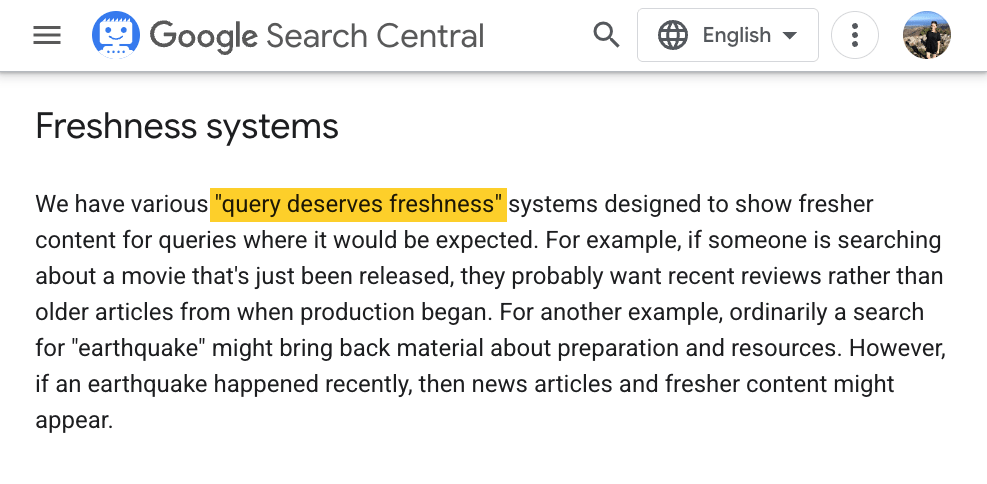
Google looks at freshness in different ways. This includes when the page was last updated, whether the topic requires recent information, and how fresh the backlinks pointing to the page are.
When all of these signals become outdated together, rankings usually start declining gradually.
AI systems have made this even more important.
If your article still references old studies or outdated statistics while competitors are publishing newer research, AI systems are naturally more likely to trust and surface the newer source.
That is simply how these systems are designed.
How to Identify This Type of Decay
- The content contains old statistics or outdated screenshots
- Competitors are referencing newer research
- Traffic slowly declines over time
- The topic depends heavily on recent information
- The page has not received fresh backlinks or mentions recently
How to Fix It
Update outdated information regularly. Replace old data, refresh examples, improve accuracy, and add recent insights wherever needed.
You do not always need to rewrite the entire article. Sometimes small strategic updates are enough to restore freshness signals.
Update SEO Meta Data
Sometimes all you need to do is update the SEO metadata of the page, including:
- SEO Title
- Meta Description
- Main Keywords
If your CTR is low, Google can take that as a signal that users are not finding your result relevant or appealing enough compared to other pages in the SERP.
A lot of people jump straight into technical SEO audits when the real problem is simply weak metadata.
Sometimes a stronger title alone can improve traffic significantly without changing the actual content.
How to Identify This Type of Decay
- Impressions remain stable but clicks decline
- CTR drops inside Google Search Console
- Rankings stay similar while traffic decreases
- Competitors have more compelling SEO titles
- Your meta description looks generic or outdated
How to Fix It
Rewrite the SEO title and meta description based on current search intent. Make them clearer, more specific, and more aligned with what users actually want to click.
Better keyword positioning and stronger hooks can often improve CTR very quickly.
Search Intent Shifts Beneath Your Feet
Search intent is never fixed.
A keyword that triggered informational blog posts six months ago might now trigger comparison pages, product pages, videos, or transactional results.
When search intent changes and your content does not adapt, Google starts re-evaluating whether your page still deserves to rank.
This is why regularly checking live SERPs is important.
When Google starts showing AI Overviews, expanded People Also Ask sections, video blocks, or product carousels, user behavior changes as well. Your content format may need to change too.
How to Identify This Type of Decay
- Google starts ranking different content formats
- SERP layouts change for the target keyword
- Traffic drops suddenly despite stable backlinks
- Competitors with different intent alignment outrank the page
- Your content no longer matches what users expect
How to Fix It
Study the current SERP again and understand what type of content Google is rewarding now.
In some cases, fixing intent mismatch requires changing the structure or angle of the entire page instead of simply updating a few paragraphs.
The AI Answer Engine Problem

Content decay now happens on a surface most website owners cannot directly see.
Google AI overview pull information from multiple sources and generate direct answers inside the search experience itself.
This means your page can still rank well traditionally but receive fewer clicks because users already got their answer from AI-generated summaries.
In competitive topics where multiple websites cover the same information, AI systems usually pick the clearest, freshest, and most directly answerable version.
Passive wording, outdated examples, unnecessary filler, and weak structure make it harder for AI systems to use your content confidently.
How to Identify This Type of Decay
- Rankings remain stable but clicks decline heavily
- AI Overviews appear for important keywords
- The page gets impressions but very little traffic
- Competitors are being cited inside AI-generated answers
- The content lacks direct and structured answers
How to Fix It
Structure content in a way that is easier for AI systems to understand and extract. Use direct answers, clearer formatting, updated examples, concise explanations, and logical heading structures.
The easier your content is to interpret, the higher the chance it gets surfaced inside AI-generated experiences.
The Content Lifecycle: Five Phases
Every piece of content follows a predictable lifecycle. It’s very important to know where your pages sit so you know what to do instead of trying something blindly.
- Early traction: The article gets indexed, starts showing up in search results, and picks up early links or shares. Traffic is low but moving in the right direction.
- Growth: Rankings climb across more keywords. Organic traffic builds month over month. The article pulls in a consistent stream of visitors.
- Traffic peak: The page reaches its highest visibility and clicks, typically when ranking in top three positions for target keywords.
- Slow plateau: Traffic looks stable on the surface, but rankings slip by one or two positions. Competitors are improving their articles. The content is starting to age.
- Decline: Fresher, more authoritative content from competitors pushes the article further down the search results. Traffic drops off.
Most site owners invest heavily in the first three phases and almost nothing in the last two. That’s the gap. The plateau phase is where intervention matters most. A page plateauing can stay plateaued for months or years if you refresh it right.
A page in decline is harder to rescue, but recoverable with the right diagnosis. The pages worth your time are the ones that were ranking well and are now slipping, not your worst performing content.
Build a System So Decay Doesn’t Happen Again
The difference between sites whose traffic grows and those that are losing it is not content creation rate. It’s maintenance discipline. The teams that win treat content decay as a core growth safeguard, not an afterthought.
Audit and Alert on a Schedule
Set up quarterly audits of your high-value pages. For time-sensitive topics (regulations, new research, market data), increase this to monthly. Most teams benefit from a monthly review of their top twenty pages and a quarterly review of the broader library.
Use alerts. Set up rank tracking to notify you when a page slips by more than two positions in a single month. Set up GSC alerts for impressions declining by more than twenty percent month over month. Real-time warnings beat quarterly discovery by miles.
Allocate Maintenance Into Your Content Calendar
The one system most teams skip: a content calendar that includes maintenance alongside creation. Allocate roughly thirty percent of your monthly writing capacity to refreshing and consolidating existing content, not just creating new pieces. Most teams invert that ratio. That’s why they plateau.
I have audited sites where the team was publishing twelve articles a month but losing eight thousand monthly visitors to decay across the existing library. No amount of new content fixes that math. You have to defend what you’ve already built.


